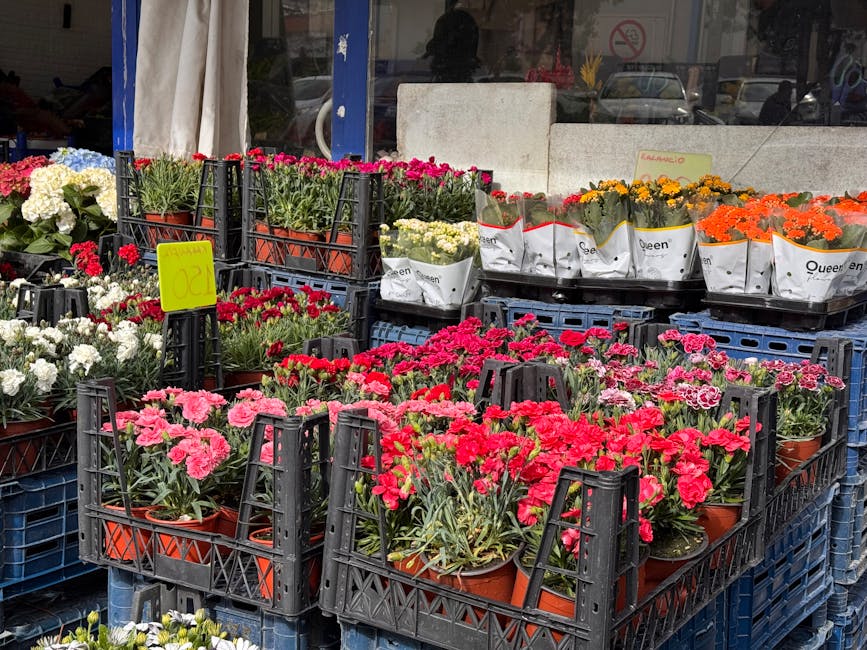
Harrow Council fines for pavement flower stands
Posted on 13/10/2026
Harrow Council fines for pavement flower stands: what shopkeepers need to know
If you run a florist, convenience shop, cafe, or small local business in Harrow, a pavement flower stand can feel like a simple, cheerful way to catch the eye. Fresh colour on a grey street. A few passers-by stopping to browse. Easy enough, right? But the reality is a bit more serious. Harrow Council fines for pavement flower stands can become an issue if a display is placed on the public highway without permission, blocks footway access, or creates a nuisance.
This guide explains how the process usually works, why it matters, what can trigger enforcement, and how to avoid costly mistakes. We will also cover practical steps, compliance basics, and the small details that often get missed until a warning letter lands on the mat. Let's face it, nobody opens their shop in the morning expecting a council enforcement headache.

Table of Contents
- Why Harrow Council fines for pavement flower stands Matters
- How Harrow Council fines for pavement flower stands Works
- Key Benefits and Practical Advantages
- Who This Is For and When It Makes Sense
- Step-by-Step Guidance
- Expert Tips for Better Results
- Common Mistakes to Avoid
- Tools, Resources and Recommendations
- Law, Compliance, Standards, or Best Practice
- Options, Methods, or Comparison Table
- Case Study or Real-World Example
- Practical Checklist
- Conclusion
- Frequently Asked Questions
Why Harrow Council fines for pavement flower stands Matters
A pavement flower stand may look harmless, but on a busy street it can affect far more than shop frontage. It can narrow the walking space for parents with pushchairs, older residents, wheelchair users, delivery riders, and people carrying shopping bags on a wet afternoon. In a place like Harrow, where streets can be lively and pavements are often already shared by signs, bins, scooters, and street furniture, even a small stand can create a pinch point.
That is why councils tend to care about these displays. The issue is not flowers as such. It is the use of public space. If a stand is out on the pavement without the right consent, or if it is positioned badly, the council may view it as an obstruction. In some cases, that can lead to warnings, removal requests, or fines depending on the circumstances.
There is also a reputation point here, and it is easy to underestimate. A neat, lawful display makes a business look thoughtful. A cluttered pavement arrangement can do the opposite. Customers notice. Neighbours notice. Enforcement officers definitely notice.
Key point: the risk is usually not about flowers themselves, but about placing a commercial display on land that belongs to everyone, not just the shop in front of it.
Practical takeaway: if your flower stand sits outside your premises, treat it as a public-space issue first and a retail display second.
How Harrow Council fines for pavement flower stands Works
In broad terms, council enforcement usually starts when a pavement display is noticed by a resident, a passer-by, or an officer inspecting the area. The exact process can vary, and it is sensible not to assume every case follows the same path. But the typical sequence looks something like this:
- An officer spots the stand or receives a complaint.
- The council assesses whether the display is causing an obstruction, breaching local rules, or operating without permission.
- You may receive an informal warning, a request to move the stand, or formal enforcement action.
- If the issue continues, financial penalties or removal costs can follow depending on the council's powers and the facts of the case.
That last point matters. Many business owners assume a fine appears instantly. Often it does not. More commonly, the council wants compliance first. But once there has been a warning, ignoring it is where things become expensive rather quickly. And honestly, that is usually the avoidable part.
It also helps to understand that a pavement flower stand can be viewed in different ways. A lightweight basket of bouquets is not the same as a large A-board style display overflowing onto the footway. A tidy arrangement tucked close to the shopfront is not the same as a broad setup that forces pedestrians into the kerb. Context is everything.
For businesses that already manage local delivery or seasonal ranges, a display strategy can be built around products that are easy to move and easy to keep neat. For example, retailers using flower delivery in North Harrow or a local florist in North Harrow model often plan their front-of-shop merchandising differently from businesses that rely only on walk-in trade.
Key Benefits and Practical Advantages
It might seem odd to talk about benefits in an article about fines, but there are real advantages to getting this right. A compliant pavement stand can still be useful, and it can work hard for your business without putting you at risk.
- Better customer flow: a tidy display can draw people in without blocking the path.
- Lower enforcement risk: following a sensible layout reduces the chance of complaints and fines.
- Improved presentation: a clean, well-spaced stand tends to look more professional.
- Stronger local trust: neighbours and nearby traders usually prefer businesses that keep pavements clear.
- More flexibility: once your process is sorted, seasonal changes are much easier to manage.
To be fair, the best outcome is not just "avoiding punishment." It is running a front-of-shop display that quietly supports sales while staying out of trouble. That is the sweet spot. You set it out, it does its job, and nobody has to have a tense conversation about obstruction notices.
There is also a commercial advantage that often gets missed: a compliant setup is easier to scale. If you ever add larger bouquets, wedding displays, or event stock, a clear display habit already exists. That can save time on busy mornings, especially when the shop is half-open, the kettle is still warming, and someone wants a quick last-minute bunch.
Who This Is For and When It Makes Sense
This topic matters most to small businesses that use the pavement as part of their retail frontage. That includes florists, gift shops, newsagents, grocers, cafes with seasonal floral displays, and any business that uses portable flower stands outside the entrance.
You will find it especially relevant if:
- you place bouquets or bunches near the doorway to attract footfall;
- you use a freestanding display on the public pavement;
- you have had a complaint about obstruction or clutter;
- you have already received a council letter or informal warning;
- you are planning a new shopfront layout and want to do it properly from day one.
It also makes sense for landlords and business tenants to understand the issue together. A lease might say one thing about signage or frontage, but local enforcement is another matter entirely. If the pavement belongs to the public highway, permission often matters more than what feels practical from inside the shop.
If you are already thinking about how to present flowers more cleanly inside or near the entrance, product range matters too. Smaller stock lines, mixed seasonal bundles, and lighter display baskets can be easier to manage than bulky arrangements. In some cases, businesses that focus on compact retail-friendly options such as flower shops in North Harrow find they can create a strong display without overreaching onto the pavement.
Step-by-Step Guidance
If you want to avoid Harrow Council fines for pavement flower stands, the safest approach is to treat the display as something that needs planning, not improvising. Here is a sensible, business-first process.
1. Check exactly where the stand will sit
Start by identifying whether the stand is fully within private property or partly on the public highway. That boundary sounds obvious, but on real streets it can be awkward. Old shopfronts, shallow doorways, tree pits, kerbs, and street furniture can make the usable area much smaller than it first appears.
2. Measure the clear walking space
You need enough room for people to pass comfortably. The wider the street footfall, the more important this becomes. Think in real terms: could two people pass each other without forcing one into the road? Could a wheelchair user get through without awkward manoeuvring? If the answer is no, the stand is probably too intrusive.
3. Review whether permission is needed
Depending on the arrangement, you may need approval from the council. Do not guess. A quick assumption can turn into a costly correction later. It is better to ask early than to rearrange stock after an enforcement note arrives. Nobody enjoys that sort of scramble, especially first thing on a rainy Tuesday.
4. Design the stand for easy removal
Portable, lightweight, and tidy usually works best. A display that can be brought in quickly at closing time, or moved when the pavement gets busy, is easier to manage and tends to be looked on more favourably than a fixed, sprawling setup.
5. Keep the display under review
Conditions change through the day. Morning commuters, lunch traffic, school runs, and weekend browsing all create different movement patterns. A stand that feels fine at 8:30 can be awkward by 12:30. Check it at least once or twice during busy periods.
6. Train staff on the basics
It only takes one rushed employee to push the stand too far out or leave extra stock blocking the pavement. Give everyone the same simple rule set. The goal is consistency, not perfect formality.
7. Keep a record of your checks and permissions
This is a small thing, but useful. A note of when you checked the layout, who moved the display, and any council communication can help if an issue is later raised. It also makes handovers easier when staff change.
Simple rule: if the display cannot be explained clearly, measured sensibly, and moved quickly, it probably needs rethinking.
Expert Tips for Better Results
A lot of pavement display problems come down to design choices made before a single flower is sold. A few small improvements can make a surprisingly big difference.
- Use lower, narrower stands: these are usually easier to keep within the frontage line.
- Keep the heaviest stock closest to the wall: that reduces the chance of accidental sprawl.
- Use short, clear signage: too many signs create visual clutter and can make the area feel tighter than it is.
- Rotate stock often: fresh-looking bouquets encourage quicker sales and reduce the need for oversized displays.
- Plan for windy days: a display that looks fine on a calm morning can become messy by lunchtime. Everyone has seen that one flower bucket wobbling in the breeze. Not ideal.
There is also a subtle customer-experience point here. A well-run flower display feels intentional. It invites a glance, maybe a pause, maybe a purchase. A crowded pavement arrangement feels improvised. That small difference matters.
If you sell flowers for everyday gifting as well as seasonal occasions, keeping a reliable range on hand can help. Businesses that offer practical options like same-day flower delivery in North Harrow often need a layout that balances presentation with speed, because front-of-shop traffic can be busy and a bit unpredictable.

Common Mistakes to Avoid
Most problems with pavement flower stands come from a handful of predictable mistakes. They are easy to make, especially when the shop is busy and someone is trying to be helpful in a hurry.
- Assuming small = permitted. A tiny stand can still be an issue if it blocks movement or sits on the highway without permission.
- Leaving the display out overnight. That can create nuisance, damage, or an impression that the frontage is unmanaged.
- Ignoring informal warnings. A friendly conversation from an officer is often the best time to fix things. Do it then.
- Using too many separate items. Multiple buckets, signs, and crates can create a much larger footprint than expected.
- Forgetting about accessibility. A display that works for you but not for a wheelchair user is not really working well at all.
- Changing the layout without checking again. What was fine in one configuration may not be fine after a quick stock shuffle.
A common real-world pattern goes like this: the stand starts small, then over a few weeks more buckets are added, maybe a chalkboard appears, and suddenly the pavement is doing all the heavy lifting. It happens. It really does. The fix is usually to reset the layout before anyone starts measuring with a stern face.
Tools, Resources and Recommendations
You do not need a complicated toolkit to keep a pavement flower stand under control, but a few practical items help a lot.
- Tape measure: the simplest and most useful thing you can carry.
- Floor markers or discreet boundary markers: useful for training staff where the stand must not cross.
- Portable stand or basket system: easier to move than a bulky fixed display.
- Notebook or digital log: handy for keeping track of permission checks and layout reviews.
- Weather cover: useful on damp or windy days, especially in typical London drizzle.
For businesses that manage a wider flower range, it can also help to review delivery, care, and presentation alongside the pavement display. If your bouquets are not lasting well, or if staff are unsure how to maintain freshness, the display can look tired quickly. A useful internal reference point is flower care guidance, which can support better stock handling, and delivery information if your display is part of a broader service model.
Expert summary: the best front-of-shop displays are the ones that look effortless because the planning behind them is doing quiet work in the background.
Law, Compliance, Standards, or Best Practice
Although this article is practical rather than legal advice, the main compliance principle is straightforward: public pavement space is not automatically available for business use. If you place a flower stand on the pavement, you should assume that rules may apply and that the council may expect the display to be authorised, safe, and unobstructive.
In UK practice, councils usually focus on a few core issues:
- whether pedestrians still have a clear, safe route;
- whether the stand creates a hazard or nuisance;
- whether the business has the right to occupy that part of the highway;
- whether the display can be moved or removed quickly;
- whether the frontage remains accessible to all users.
Good practice is usually common sense made visible. Keep clear routes. Avoid blocking dropped kerbs. Do not spread stock into the footway just because it is sunny and footfall looks low. And remember that a street can feel spacious to you while still being awkward for someone else. That difference matters more than people sometimes realise.
If you are unsure, treat compliance as a business protection measure rather than a nuisance. A little caution now can save a lot of hassle later. Truth be told, it is much easier to adjust a display than to argue over a penalty after the fact.
Options, Methods, or Comparison Table
Not every flower business should use the same approach. Below is a simple comparison of common display styles and how they tend to work in practice.
| Display option | Best for | Main advantage | Main risk |
|---|---|---|---|
| Small basket near the doorway | Compact shopfronts | Easy to move and tidy | Can still block access if placed badly |
| Freestanding pavement stand | High-footfall retail areas | Strong visibility | Higher enforcement and obstruction risk |
| Frontage display inside boundary | Businesses with limited pavement space | Usually safer from a compliance perspective | May be less visible from a distance |
| Rotated seasonal stand | Florists with changing stock | Flexible and fresh-looking | Needs regular staff attention |
There is no single best choice for every business. If your frontage is narrow, an inside-boundary setup may be the sensible option. If your pavement is wide and council permission is in place, a carefully managed stand may work well. The point is to match the display to the street, not force the street to suit the display.
Case Study or Real-World Example
Imagine a small florist on a modest high street in Harrow. On busy days, the owner places a wooden flower stand just outside the doorway with mixed seasonal bunches, a few wedding enquiries leaflets, and a chalk sign saying "Fresh today." At first, it works nicely. People notice the colour, a couple of bouquets sell before lunch, and the frontage feels lively.
Then spring arrives, footfall increases, and the stand gets moved a little further out to make room for more stock. A customer with a pram has to step around it. A delivery rider nudges past. A neighbour complains that the pavement feels cramped. Soon after, the business receives a council warning.
What changes next is usually simple, not dramatic. The owner pulls the stand back inside the frontage line, reduces the size, keeps only the most saleable bunches outside, and makes sure staff know the display must be checked at opening and midday. Sales continue. The pavement becomes easier to navigate. No drama, no grand speech. Just a practical reset.
That kind of adjustment is common. In our experience, the businesses that respond early tend to keep both their customers and their neighbours happier. And that is worth a lot on a busy street.
Practical Checklist
Use this checklist before placing or leaving a flower stand outside:
- Have I checked whether the stand is on private land or the public pavement?
- Is there enough clear walking space for pedestrians, wheelchairs, and pushchairs?
- Have I confirmed whether council permission or consent is needed?
- Can the stand be moved quickly if needed?
- Is the display neat, stable, and not likely to spread out?
- Have staff been told exactly where the stand must sit?
- Have I reviewed the display during busier periods?
- Do I have a note of any council communication or warning?
- Does the layout still look sensible after stock changes?
- Would I be comfortable defending this arrangement if someone challenged it?
Quick reminder: if the answer to any of those is "not really," it is probably time to tighten things up.
Conclusion
Harrow Council fines for pavement flower stands are usually a sign that a display has drifted from "helpful shopfront" into "public-space problem." The good news is that this is often preventable with careful placement, sensible sizing, and a basic understanding of the rules around footway use. A flower stand can still be valuable. It just needs to be managed like part of your business operations, not an afterthought.
For shop owners, the smartest approach is simple: keep the display tidy, keep it movable, keep it within the right boundary, and keep checking it as conditions change. That way you protect the customer experience, avoid unnecessary enforcement, and let the flowers do what they do best. Brighten the street. Draw people in. Make a small moment nicer.
Get a free quote today and see how much you can save.
And if you are tidying your frontage this week, take a minute to look at the pavement with fresh eyes. It is usually the small adjustments that make the biggest difference.
Frequently Asked Questions
Can Harrow Council fine me for a flower stand on the pavement?
Yes, potentially. If the stand is placed on the public pavement without permission, obstructs pedestrians, or creates a nuisance, enforcement action may follow. The exact outcome depends on the situation and how the council assesses the display.
Do I need permission to put flowers outside my shop?
Often, yes, if the flowers are on public land or the highway. Do not assume a small stand is automatically allowed. It is better to check the local position first than to discover the rules after a warning.
What counts as an obstruction?
Anything that narrows the footway too much, blocks access for wheelchairs or pushchairs, or creates a hazard may be treated as an obstruction. Even a neat-looking stand can still be a problem if it sits in the wrong place.
Will the council warn me before fining me?
Frequently there is some form of warning or request to remedy the issue first, but that is not guaranteed in every case. If there is already a complaint, or if the obstruction is serious, enforcement may move more quickly.
Can I leave the flower stand out overnight?
That depends on local rules and the exact setup, but leaving it out overnight can increase the risk of nuisance, damage, or enforcement. A removable stand that is brought in when the shop closes is usually the safer approach.
Does a small basket count as a pavement flower stand?
It can, if it is used as a commercial display on the public pavement. The size matters, but so does the location. Small does not always mean exempt, which is a bit annoying, but there it is.
How can I make my display safer from enforcement?
Keep it narrow, tidy, and close to the frontage. Make sure people can pass comfortably. Review it during busy periods, and do not assume that yesterday's layout will still work today.
What should I do if I receive a council warning?
Act quickly. Move or adjust the display, record what you changed, and check whether further permission or clarification is needed. A prompt response is usually much better than arguing with the problem.
Are flower stands treated the same as sandwich boards or other pavement signs?
They are similar in that all can affect the footway, but the council may look at each item differently depending on size, placement, and obstruction risk. The key issue is still the same: does the public have safe, clear passage?
Can I keep a flower stand if it stays within my shop frontage?
Possibly, yes. If it remains within private property and does not intrude onto the public highway, the risk is usually lower. Even then, it is wise to check the exact boundary carefully, because frontages can be deceptive.
What is the best practical setup for a small florist?
Usually a compact, movable display close to the doorway works best. It is easier to control, easier to remove, and less likely to cause complaints. For many businesses, simple wins. Not flashy, just sensible.
Where can I get more help with running a flower business locally?
If you are planning stock, presentation, or local delivery as part of a wider retail operation, it can help to review related business pages such as the florist, flower delivery, and care guidance sections on your website. A coherent setup makes day-to-day trading smoother, and frankly, less stressful.